
Showing posts with label Brahmabandhab Upadhyay. Show all posts
Showing posts with label Brahmabandhab Upadhyay. Show all posts
Sunday, February 12, 2012


Saturday, December 31, 2011
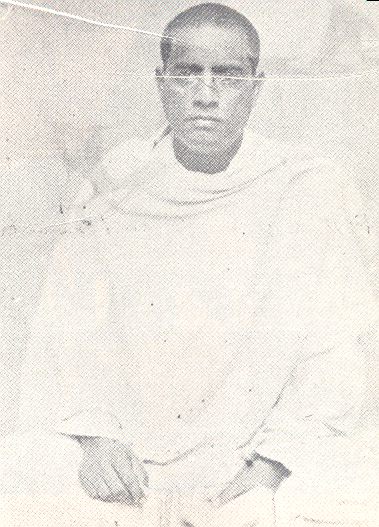
Year 2011: The 150th birth anniversary of Brahmabandhab Upadhyay
For the past few days, I've been revisiting Brahmabandhab Upadhyay. Year 2011 is supposed to be the year of his 150th birth anniversary. In 2007, the year of his death anniversary, some of us organized a small memorial function. Couldn't do much this year. Anyway, though I cannot agree with all that he said and stood for, he continues to be a fascinating figure to me. As "iamplural", he was "dual". And, as the year comes to an end, I remember him yet again. I perhaps will continue to grapple with him in the coming year.
Here's a small extract about him from his biography:
 It is not well known that it was Brahmabandhab Updhayay who helped propel Rabindranath Tagore to fame. Upadhyay first publicly noticed Tagore in a serious way in an article entitled 'The world poet of Bengal' in the weekly Sophia (September 1, 1900). With uncanny prescience he wrote:
(Julius J. Lipner, Brahmabandhab Upadhyay: The Life and Thought of a Revolutionary, OUP, 2001, p. 281)
Lipner calls him a "forgotten colossus" and suggests that we need a more psychological-oriented biography of the man. Perhaps someone should write a novel.
Here's a small extract about him from his biography:
'Rabindra is not only a poet of nature and love but he is a witness to the unseen. Revelation apart, Kant, Tennyson and Newman are considered to be three modern witnesses to the invisible world. Poor Bengal has produced another and it is Rabindra Nath.... If ever the Bengali language is studied by foreigners it will be for the sake of Rabindra. He is a world-poet.... He will be ranked amongst those seers who have come to know the essence of beauty through pain and anguish.
(Julius J. Lipner, Brahmabandhab Upadhyay: The Life and Thought of a Revolutionary, OUP, 2001, p. 281)
Lipner calls him a "forgotten colossus" and suggests that we need a more psychological-oriented biography of the man. Perhaps someone should write a novel.
Monday, February 05, 2007
Remembering Brahmabandhab Upadhyay
2007 is the year of death centenary of Brahmabandhab (Brahmabandhav) Upadhyay. This 11th February is his birth anniversary. Some of us are trying to organize a discussion around the life and ideas of the man. I just wrote a small introduction which we intend to send along with the invitation, since we don't expect many people to know about him. Here is what I wrote
1861 - Born as Bhabanicharan Bandhopadhyay in a Brahmin home. Comes under the influence of Keshabchandra Sen in his boyhood.
1887 - Initiated into the Church of New the Dispensation of Keshab
1888 - At the age of twenty-seven goes as a Brahmo teacher to Hyderabad in Sindh, and there chiefly through his friendship with two missionaries, Redman and Heaton gradually became convicted of the truth of the resurrection of Christ and his co-eternal Sonship. Reads Faa di Bruno’s Catholic Belief
1891 - Baptised in February by an Anglican, affirming at the same time that he did not thereby join the Church of England. In September becomes a Roman Catholic.
1894 - In January starts Sophia from Karachi. Dons the ochre robe of a sannyasi. Takes the name Brahmabandhab, the friend of Brahaman (Theophilus in Greek).
1897 - Emphasizes the potential of ‘Vedantic Theism’ and formulations of Shankara
1898 - Writes in Sophia, “We are Hindu so far as our physical and mental constitution is concerned, but in regard to out immortal souls we are Catholic. We are Hindu Catholics.”
1899 - In March, monthly Sophia is discontinued. Followed consecutively by two short-lived journals – the weekly Sophia and The Twentieth Century. Both publications include political discussion on topics of the day. Adopts a nationalist stance and becomes unsparing in his criticism of the behaviour of foreign Christian missionaries and of various actions of the British Government.
1900 - Works closely with the poet Rabindranath Tagore in developing the famous ashram at Shantiniketan
1902-03 - Pays a visit to Europe. Disappointed with the west.
1904 - Starts a daily Bengali newspaper Sandhya, culturally and politically anti-British.
1907 - Undergoes prayashcitta, the penitential rite by which the excommunicate formally returns to the Hindu fold. On September 10 arrested by the British Government on a charge of sedition. On October 27 dies while recovering from a hernia operation. Cries “Thakur, Thakur”
Brahmabandhab Upadhyay: A Very Short Introduction
Upadhyay’s short life of 46 years or so spanned one of the most creative periods of Indian history, when India as a nation was in the making. A number of the key-figures of the nation-building process – Debendranath and Rabindranath Tagore, Keshabchandra Sen and Pratapchandra Majumdar, Annie Besant, Ramakrishna Paramhansa and Swami Vivekananda, Bipinchandra Pal and Aurobindo Ghose – to name but a few, encountered his forceful personality. Upadhyay was in the thick of the struggle to form the soul of modern India - Julius Lipner
Upadhyay is one of the enigmas of modern India and … a potential embarrassment to those who invoke him – Julius Lipner
Upadhyay’s short life of 46 years or so spanned one of the most creative periods of Indian history, when India as a nation was in the making. A number of the key-figures of the nation-building process – Debendranath and Rabindranath Tagore, Keshabchandra Sen and Pratapchandra Majumdar, Annie Besant, Ramakrishna Paramhansa and Swami Vivekananda, Bipinchandra Pal and Aurobindo Ghose – to name but a few, encountered his forceful personality. Upadhyay was in the thick of the struggle to form the soul of modern India - Julius Lipner
Upadhyay is one of the enigmas of modern India and … a potential embarrassment to those who invoke him – Julius Lipner
Brahmbandhab Upadhyay was born on 11 February 1861 in Bengal. A fiery intellectual – Vivekananda-like in scope of his vision of spiritual revival of India, like Aurobindo a nationalist to the core, and a comrade of Tagore as the latter materialized his idea of Shantiniketan – Upadhayay was a trailblazer in many ways. An editor of religious as well as political journals; an itinerant preacher challenging most cherished ideals of his day; a nationalist who sought self-respect for his motherland; an educationist; a sannyasi. He treaded on a terrain with no guidance from the past, and made possible creative synthesis of knowledges arising from East as well as West. But sadly the hero of cultural awakening lies forgotten by a large majority of Indians. A genius like him is not necessarily popular, as the comment above suggests. However, those who wish to give the hero his due, those who seek integration of experience and faith, those who wish to understand the soul of twenty-first century India must get into conversation with the ideas, the ideals and the life of Brahmabandhab Upadhayay.
1861 - Born as Bhabanicharan Bandhopadhyay in a Brahmin home. Comes under the influence of Keshabchandra Sen in his boyhood.
1887 - Initiated into the Church of New the Dispensation of Keshab
1888 - At the age of twenty-seven goes as a Brahmo teacher to Hyderabad in Sindh, and there chiefly through his friendship with two missionaries, Redman and Heaton gradually became convicted of the truth of the resurrection of Christ and his co-eternal Sonship. Reads Faa di Bruno’s Catholic Belief
1891 - Baptised in February by an Anglican, affirming at the same time that he did not thereby join the Church of England. In September becomes a Roman Catholic.
1894 - In January starts Sophia from Karachi. Dons the ochre robe of a sannyasi. Takes the name Brahmabandhab, the friend of Brahaman (Theophilus in Greek).
1897 - Emphasizes the potential of ‘Vedantic Theism’ and formulations of Shankara
1898 - Writes in Sophia, “We are Hindu so far as our physical and mental constitution is concerned, but in regard to out immortal souls we are Catholic. We are Hindu Catholics.”
1899 - In March, monthly Sophia is discontinued. Followed consecutively by two short-lived journals – the weekly Sophia and The Twentieth Century. Both publications include political discussion on topics of the day. Adopts a nationalist stance and becomes unsparing in his criticism of the behaviour of foreign Christian missionaries and of various actions of the British Government.
1900 - Works closely with the poet Rabindranath Tagore in developing the famous ashram at Shantiniketan
1902-03 - Pays a visit to Europe. Disappointed with the west.
1904 - Starts a daily Bengali newspaper Sandhya, culturally and politically anti-British.
1907 - Undergoes prayashcitta, the penitential rite by which the excommunicate formally returns to the Hindu fold. On September 10 arrested by the British Government on a charge of sedition. On October 27 dies while recovering from a hernia operation. Cries “Thakur, Thakur”
Wednesday, May 10, 2006
Statements of Faith
I don't quite remember what set me and Joel talking about the statements of faith the other day. He was explaining his problem with such assertions. These statements are meant to define what you believe in. But in reality what they achieve is they define boundaries; deployed to keep the "other" out. This has been part of the western religious experience and tradition where one Christian denomination had to rigourously distinguish itself from the other. The statements of faith were meant to provide a uniform identity to the adherents of a particular religious group. They were to select friends and foes by replaying these statements in their mind.
Historically speaking this was an exercise in community building which responded to the needs of burgeoning democarcy. Like rise of nations in the west in post-Renaissance period the religious denominations also had to develop secure borders.
In the world where definitions of democracy and nation are being rewritten there is a need to revise the rationale of statements of faith.
In the pluralist world in general and in India in particular Christians have to be wary of such heavily westernised concept of "statement of faith."
My mind goes back to Brahmbandhab Upadhyay, the dynamic intellectual and a Christian theologian in Bengal, the editor of journals and later a nationalist revolutionary who was disowned by the Church in early 20th century. Upadhyay instead of confining himself in the historically conditioned statements, took a bold step, a heroic decision to call himself a Hindu Catholic, instead of a Roman Catholic.
Indian spirituality is embracing. However this is not to say that everything goes here in India. The sharp debates in the Indian intellectual history between Sankara, Ramanujan and Madhva give an example that debating and clarification of postions is an important ingredient of Indian tradition.
Upadhyay carries on that tradition.
The dynamic process of "exclusion and embrace" (a term courtesy Miroslav Volf) will give regenerative impetus to our communitarian journeys. The fossilized statements of faith can impede the progress.
Historically speaking this was an exercise in community building which responded to the needs of burgeoning democarcy. Like rise of nations in the west in post-Renaissance period the religious denominations also had to develop secure borders.
In the world where definitions of democracy and nation are being rewritten there is a need to revise the rationale of statements of faith.
In the pluralist world in general and in India in particular Christians have to be wary of such heavily westernised concept of "statement of faith."
My mind goes back to Brahmbandhab Upadhyay, the dynamic intellectual and a Christian theologian in Bengal, the editor of journals and later a nationalist revolutionary who was disowned by the Church in early 20th century. Upadhyay instead of confining himself in the historically conditioned statements, took a bold step, a heroic decision to call himself a Hindu Catholic, instead of a Roman Catholic.
Indian spirituality is embracing. However this is not to say that everything goes here in India. The sharp debates in the Indian intellectual history between Sankara, Ramanujan and Madhva give an example that debating and clarification of postions is an important ingredient of Indian tradition.
Upadhyay carries on that tradition.
The dynamic process of "exclusion and embrace" (a term courtesy Miroslav Volf) will give regenerative impetus to our communitarian journeys. The fossilized statements of faith can impede the progress.
Subscribe to:
Posts (Atom)